

To Annotate or Not to Annotate: A Comprehensive Guide on Annotating Books
If I were asked a year ago if I wrote in my books, my answer would be a very definite, “No!” I could not fathom the idea of destroying a book by annotating it, but, as the saying goes, people change.
I’ve been converted into the world of highlighting, underlining, and tabbing due in part to social media. I would see pictures of beautiful annotations on Instagram; of books filled to the brim with the readers thoughts and opinions. So, one day I decided to try annotating a book for myself. I started with Lynn Painter’s rom com Better Than the Movies, which I enjoyed. However, even while I was reading it, I could tell that this probably was not the best book for analyzing themes and commentary as Better Than the Movies’ was more obvious. So, when I spotted an old copy of Angels & Demons by Dan Brown at my local Value Village, I was set on annotating it properly.
That meant setting up an annotation key, buying different coloured tabs off Amazon, and writing my thoughts in the margins.
It turns out that annotating Angels & Demons was a lot of fun! Not only did I absolutely love the book—I personally find it better than The Da Vinci Code—this was a much more interesting book to annotate than the rom com.
Why? Well because the themes have more depth to them. Annotating generally helps the reader “read between the lines” by picking up on more complex themes and symbology. Naturally, this works better when there are more controversial topics, like the religion versus science debate in Angels & Demons, rather than a more straightforward story such as a rom-com.
With such a debate and dialogue going on between the characters in Angels & Demons, there were plenty of times where my thoughts covered almost the entire margin. One such time, I wrote my thoughts about a point that a scientist in the book was trying to make. To this, I wrote something like, “Well, Kohler is right in the sense that humans very much use religion to explain the unexplainable, but he is also wrong because I think there will always be a need for humans to believe in an all-knowing god-like figure.” Needless to say, I had fun annotating Angels & Demons. But why should one annotate their books?
There’s plenty of reasons why one should start annotating, but here’s a few of the most compelling:
1. It helps the reader remember, comprehend, and focus on the book. For me, annotating a book involves lots of underlining, tabbing, and note-taking. By actively paying attention to what I’m underling and tabbing, I can actually take a minute to process what I just read.
Furthermore, it helps me (and many others!) focus on the book, especially when the writing is dry. For example, I had to read Lord of the Flies by William Golding for my Advanced Placement English class. Basically, everyone in AP English had to read two books over the summer and write two essays in two hours on the books.
Now, as I started reading LotF, I found my thoughts wandering, and as much as I tried to force my thoughts to stay quiet and focus on the book, I couldn’t. Turns out, the solution was to grab my tabs, pen, trusty audiobook, and I was off.
Although I still found parts boring, and overall did not like the book, taking the time to annotate and understand the symbolism behind everything helped me to focus more on the story and appreciate why Lord of the Flies is so widely read, despite my personal opinions about the book.
2. Writing down one’s thoughts helps preserve the feelings one had when originally reading the book—it acts as a time capsule of sorts. I’ll use the example of Angels & Demons again. As I previously mentioned, there were plot twists right, left, and centre near the end of the book. I wrote “no,” “oh my god” and “I can’t believe he just did that,” all on one page! Before writing this post, I looked back at my notes and smiled at myself, as I remembered the shock and excitement I felt while reading it for the first time.
3. It saves time. That might be confusing, because it takes time to underline, tab, and leave one’s thoughts in the margins of a book, right? But I’m talking about saving time in the future. Whether one plans to write a book review or an essay (like I had to) later on, annotating books makes it much easier to track key symbols, passages, and thoughts on the book. Personally, I have used a tab key to track all of those (more on that below).
There’s one more thing that might be holding readers back from annotating: they do not want to ruin the book. I get it. Really, I do. I was once like that, except I have realized that it is not a bad thing to annotate a book (unless it’s a library book!) I imagine authors would likely want readers to spill their thoughts out onto the pages of their book. I’d argue it shows another level of engagement and appreciation towards the book that cannot be found anywhere else.
Here’s my current system for annotating books:
- Tab Key: I create a tab key, kind of like a legend in a map, that I keep at the start of each book, so I know which colour tab represents what. Each book varies in what I decide to track but I generally follow the same things: quotes, central theme, character development, and symbols. One thing I’ve learned is to not be afraid to change the key as I’m reading. While I was reading Lord of the Flies, I noticed that I was not using the tab for a theme I thought would be important, so I just switched it to a more relevant theme.
- Highlighting: I highlight any quote which I find is clever, well-written, worth coming back to, etc. Personally, I only use one colour to highlight, light grey, but I have seen other people highlight in different colours depending on themes.
- Underlining/Circling: I tend to underline or circle really anything that catches my eye using a black pen. Most of what I highlight is also underlined; the only difference is that underlining is more general, whereas when I highlight, I want to really emphasize what is important.
- Writing in the Margins/On Sticky Notes: For the most part, I write all my thoughts out in the margins. I’ve been pretty lucky to have books with larger margins so far, but when I know that I have so much to say about a topic, I switch to sticky notes. I remember being so passionate about this one passage in Angels & Demons that I filled up the entire sticky note with my thoughts on the argument Kohler was making for science, as opposed to religion. Remember, as much as I talk about leaving thoughts in the margins about the themes discussed in Angels & Demons, I also wrote “WHATTTTTT” and “omg no way Dan did that” and “damn” too many times to count.
In the end, annotating a book is not “ruining” it. It’s about being engaged in the book, leaving thoughtful words in the margins, and making the reading experience easier and more memorable.

Isabella Cabiria Ciaccia
Isabella Ciaccia is a high school student in Toronto, Ontario. Her favourite subjects in school are English and Biology. In her free time, Isabella can be found with her nose in a book, baking cookies, or playing soccer. She also enjoys listening to podcasts and putting together puzzles.
You may also like

A Helping Hand: The Key to Better Writing
Joyce Xia Hong offers tips on how to improve your writing, including getting a friend to read over y
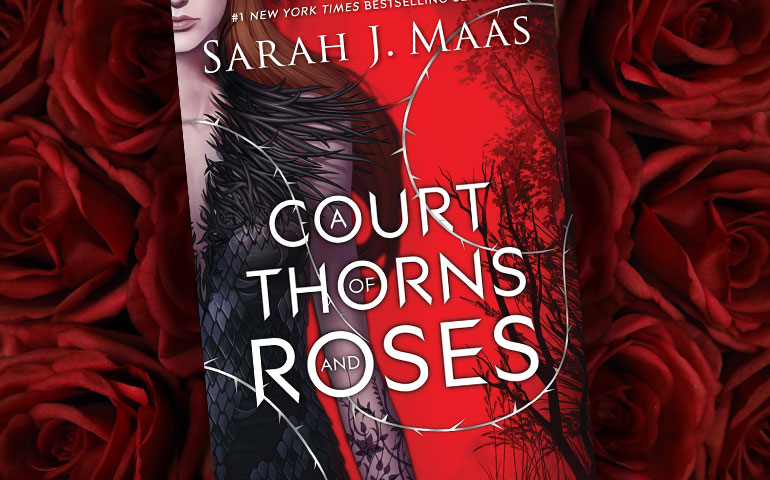
A review of A Court of Thorns and Roses
Jasmine Salvador reviews Sarah J. Maas' fantasy epic A Court of Thorns and Roses while discussing it
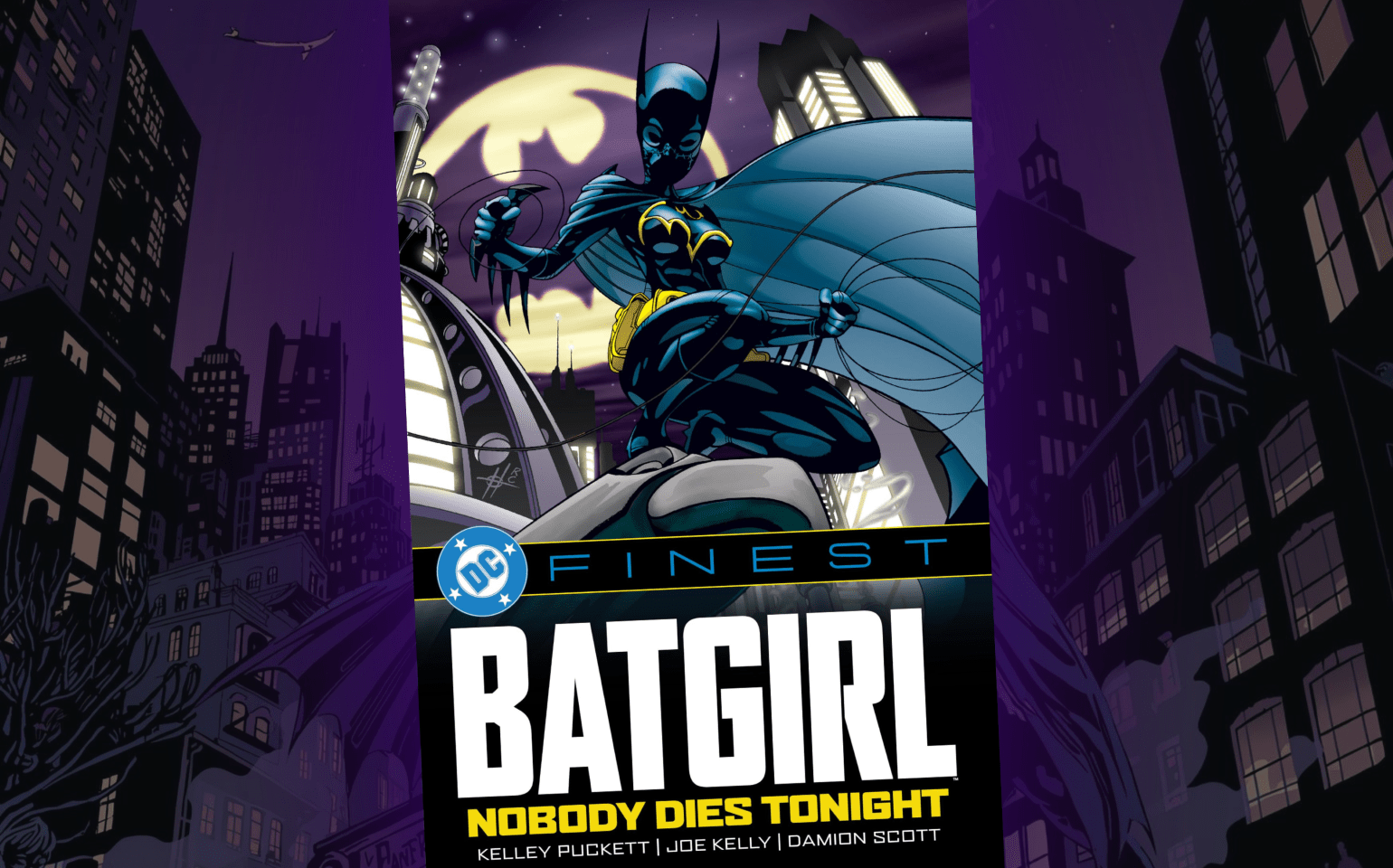
The Weight of Guilt: Batgirl: Nobody Dies Tonight
Alexane Lassi reviews DC Finest: Batgirl: Nobody Dies Tonight highlighting the graphic novel's theme