
The Trail You Walk On
A few months ago, I learned a word that completely changed the way I see myself: neuroplasticity.
It sounds complicated, but the idea isn’t. Neuroplasticity is the brain’s ability to change throughout your life. Not just learning new information but actually adapting and reorganizing itself based on what you repeatedly think, do, and experience.
When I first learned about it, my mind was overrun. Science fascinates me. Every time we repeat a thought or a behaviour, the neurons involved strengthen their connections, making that pathway easier for the brain to use again. The brain is constantly rewiring itself based on what we practice. But what stayed with me wasn’t just how it worked, it was what it meant.
For so long, I thought people were mostly fixed. There were confident people and insecure people. Outgoing people and quiet people. Successful people and everyone else. I assumed that who you were at sixteen was pretty close to who you would always be.
Neuroplasticity challenged that idea completely.
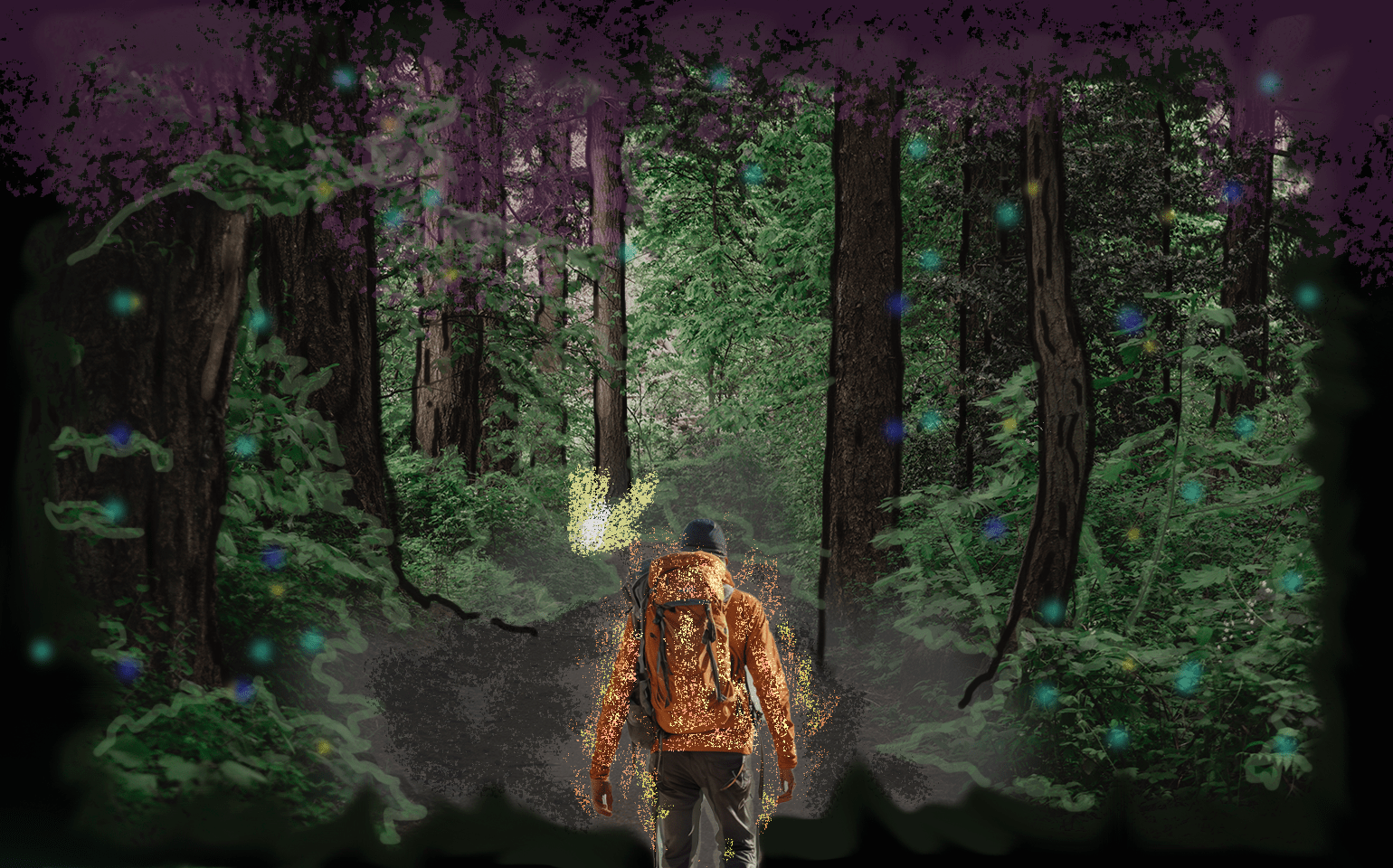
The way I think about it is this: imagine a forest. The first time you walk through it, there isn’t a trail. You’re pushing past branches, stepping over roots, and trying to figure out where you’re going. It takes effort.
But if you walk the same route every day, something changes. The grass starts to flatten. The branches move aside. Eventually, a trail appears where there wasn’t one before.
The more you use that path, the easier it becomes to follow.
I think our brains work in a similar way.
For years, I unknowingly walked the same mental trail. Every time I told myself I wasn’t naturally confident, every time I stayed quiet instead of speaking up, every time I avoided something because I was afraid of failing, I walked that path again. The dirt became more compact beneath my feet. The grass disappeared. The branches bent away as if they expected me to return.
Before long, it was the easiest path to follow.
It wasn’t that someone else was telling me these things. Most of the time, it was me. Looking back, I realize those thoughts didn’t become convincing because they were true. They became convincing because I practiced them.
The trail got deeper.
What changed wasn’t some sudden burst of confidence. Confidence came much later. What changed was that I got tired of walking the same path and expecting it to lead somewhere new.
What changed was that I got tired of waiting to feel ready.
I started applying for opportunities that intimidated me. I shared pieces of writing that felt personal. I volunteered for things that made me nervous. Sometimes I succeeded. Sometimes I felt awkward. Sometimes I replayed conversations in my head afterward and wondered why I had said certain things.
But I kept doing it.
At first, it felt like I was pretending.
People often say, “fake it ‘till you make it,” and I used to dislike that advice because it sounded dishonest. Now I think I understand it differently; it’s not about lying to yourself. Instead, it’s practicing a version of yourself that hasn’t fully developed yet.
The first few times I acted confident, I wasn’t truly confident at all. My voice still shook, I still overthought everything, and felt everyone could see through my fruitless act. I doubted myself every second.
But every time I did something that scared me, I was stepping onto a new path.
The old trail was still there, it was comfortable and familiar, something I knew how to walk. But it also told me to stay quiet and avoid all risk, pushed me into a corner and told me to wait for the other shoe to drop.
This new trail was harder. It was steep and rocky in ways I’ve never seen. It felt unnatural. Sometimes it felt wrong. But I couldn’t pretend that little by little, my heart felt lighter.
So, the more I walked it, the easier it became.
Day after day, things that once seemed impossible started to feel normal, proving that I could handle this new challenge. Speaking up became easier. Taking chances became easier. Believing in myself didn’t just become this easy process, it became instinct.
Not because I magically transformed overnight, but because I had spent months walking a different path.
That’s why neuroplasticity means so much to me.
Not because it’s a fascinating scientific concept, although it is. What matters to me is the hope behind it, the reminder that we are not trapped by old versions of ourselves.
We are not permanently defined by our fears. We are not stuck with every insecurity we’ve ever had. We are not all condemned to a version of the version we are today, doomed to repeat the same habits forever.
We can change.
Not instantly. Not perfectly. Not without setbacks.
But we can.
I think a lot of people need to hear that—students and even elderly folk. It’s simple to look at someone who seems confident, successful, or talented and assume they’ve always been that way. We see the finished trail and forget that somebody poured their soul into it.
No, they didn’t necessarily “destroy” who they were. I think a more fitting word is “de-construct.” Breaking yourself down and then rebuilding isn’t making yourself “suffer.” Pain is inevitable and vital because it builds experience and character, but self-compassion and softness is just as important.
Comparing yourself to someone else’s results without acknowledging the countless small steps it took to get there is an illusion we all fall into at some point. Most growth isn’t dramatic, it happens quietly, when nobody is watching. It’s built through small decisions repeated over and over again.
A hand raised in class. An application submitted despite self-doubt. A difficult conversation. A new challenge accepted.
One step.
Then another.
Then another.
For a long time, I thought confidence was something you either had or didn’t have. Now I think confidence is something you build, it’s the result of showing up for yourself repeatedly, even when you feel uncertain.
The old trail still exists; some days it’s tempting to follow it because it’s familiar.
But now I know something I didn’t know before.
Just because a path is familiar doesn’t mean it’s the one you’re meant to stay on.
The forest is bigger than I once believed. There are still new paths I haven’t explored, new habits I haven’t built, fears I haven’t faced, and passions I haven’t discovered.
What I do know for certain: tomorrow, I’ll keep walking.

Samar Ali
Samar is a high school student with an endless curiosity about people and the stories they carry. She loves books, movies, television, and any piece of media capable of making her feel something. When she isn't reading AO3, memorizing the meanings of flowers, or writing poems she insists are "just something she wrote," she's probably skateboarding with music in her headphones and overthinking life. Samar loves discovering new foods, staying up late and sleeping until ungodly hours, and trying to understand what makes people become who they are. She also loves love, even if she hasn't quite figured it out yet.
You may also like

No Regrets
Jessica Mu goes over how perseverance through piano lessons has left her with no regrets as she look

Failure Happens for a Reason
Failure. It's one of the ugly truths of life and chances are you're familiar with it. Simply put, th
From Fear to Fluency: My Journey Through French Immersion
Eloise Gibbens takes a look at her personal journey through French immersion and how the program ope