
Math Competitions, Identity Crisis, and Everything I Learned Along the Way
From a young age, I have enjoyed math. Working with numbers and finding the correct solution to problems was interesting and enjoyable to me. At first, these problems were simple equations involving only addition, subtraction, multiplication, and division. However, when I discovered math competitions, it was like a whole new world had been opened for me.
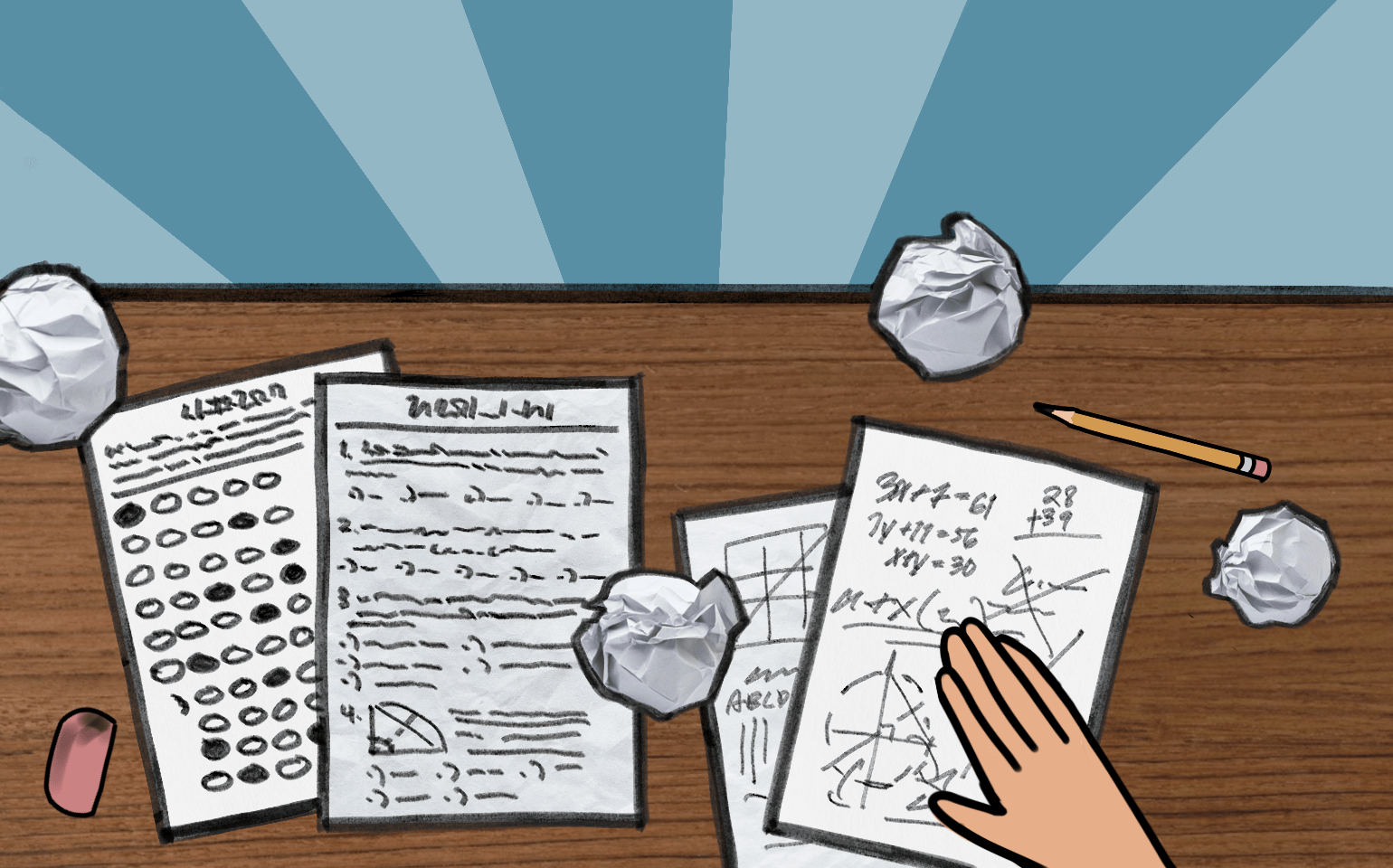
Starting in elementary school, I began completing the Canadian Math Kangaroo Contest online. From the start, I realized how different it was from the math I was familiar with. Math competitions required a decent amount of math knowledge, since you had to apply formulas, theorems, and be able to manipulate equations and work with numbers. However, it required something else: strategy. Imagine having a toolkit full of wrenches, screwdrivers, hammers—everything you could need. Then, you are given a broken car and asked to fix it. Now you have the right tools, but you need to know which ones to use and how to use them. This is what competition math is like. You need to have the appropriate math knowledge, but more importantly, and more challengingly, you need to be able to use it as part of your strategy to solve the problem (fixing the broken car!). These strategies are always very clever, creative, and intricate. Competition maths was super difficult, but that made it even more satisfying and fulfilling when you finally solved the problem.
In recent years, I have branched out to participating in other math competitions, such as the Caley Contest by the University of Waterloo and a provincial competition. By writing a variety of test papers, I was able to observe differences in question styles and approaches required to solve them, which I found very interesting. For example, the Caley Contest papers included many questions that required you to break the problem down into cases and set hypothetical values for different variables.
As I grew older and became more experienced, math competitions and math in general became a large part of my identity. This made sense, since a skill you practice often and excel at would lead you, or others, to classify it as one of your defining characteristics. However, all this ultimately led math competitions to have a negative consequence on my self-image. Whenever I didn’t do as well as I would have liked in a competition, it would absolutely crush my self-esteem and make me question my abilities, and even my value as a person. In seventh grade, I attended a provincial math competition with my class.
From the start, competing with my classmates added a lot of additional pressure. I now felt the need to not only prove my abilities to myself, but also to others.
In the end, I placed second in my school and third regionally. To make matters worse, it had all been because of basic mistakes, like calculation errors and misreading a question, which could have been easily avoided had I been more thorough and meticulous. It was an absolutely devastating, heartbreaking, and even anguishing moment for me (you might be thinking that I’m exaggerating—I wish I were), but it was also a big turning point in my journey.
My “crushing defeat” at the provincial math competition prompted me to rethink my expectations and how much power I was allowing the results to have in determining my identity. In the end, I realized that your identity is complex, made up of countless experiences from throughout your life. When I reduced my identity down to my successes, or lack of them, in math competitions, I was ignoring all the other things that truly defined me.
If I had to pick the most important lesson that math competitions have taught me, it would be that the process is far more valuable than the result. In the days and weeks leading up to a math competition, I would always review past papers, solve problems, and take the time to understand strategies for especially complex questions. My preparation for these competitions made me more disciplined and improved my problem-solving and critical thinking skills. Even if I didn’t end up earning a medal or ribbon, the experience that I acquired along the way has already made me a better and more capable person than I had previously been.
As of recently, math competitions have helped me in discovering what truly matters to me. For some people, these competitions might be about achieving the best results: winning awards, scholarships, and being number one. And if that’s your case, it’s completely valid too.
Over time, I realized that that sort of expectation put too much pressure and stress on me. I had tunnel vision about the results, and the math competition became solely about proving myself, rather than a source of enjoyment.
After reflection, I realized that through attending math competitions, my goal was not to win, but to learn new skills and have a good time. With this new mindset in place, I was able to fully enjoy the experience while putting time into things that I was more passionate about without feeling guilty. Winning a ribbon or getting a high mark would just be a welcome addition.
Throughout our lives, most of us will engage in competitive events, whether that be a spelling bee, a sports meet, a piano festival, or a math competition. We might prepare tirelessly for these moments and go into them with high expectations for ourselves, but it is important not to fixate on these events and their results, and to realize that there is so much more to your identity and your life than what happens in a single day. It is more than okay to care and want good results, but take care not to let it dictate your self-esteem and self-image. My performances at math competitions were never stellar, but I learned not to let that diminish my love for it. Because at the end of the day, your identity is created through hundreds of thousands of experiences, so why let a single one of them define you?

Amanda Xu
Amanda is a first-generation Chinese Canadian immigrant and a current grade 9 student based in New Brunswick. When not studying, she can be found reading, drawing, and hanging out with friends. Amanda is still unsure about what the future has in store for her, but she hopes that through her writing, she can not only find her own identity but also support and uplift others in the process.
You may also like
The Importance of Sport for Youth
Ever since I’ve been able to run and kick a ball, sports have been a huge part of my life. I come

The Power of Saying No
Discover the power of saying no and how setting boundaries can build confidence, self-respect, and h
The Room Where It Happens: How 30 Seconds Changed My Perspective
Alyssa Saidova shares how working as a page for the Ontario legislature changed her perspective.