
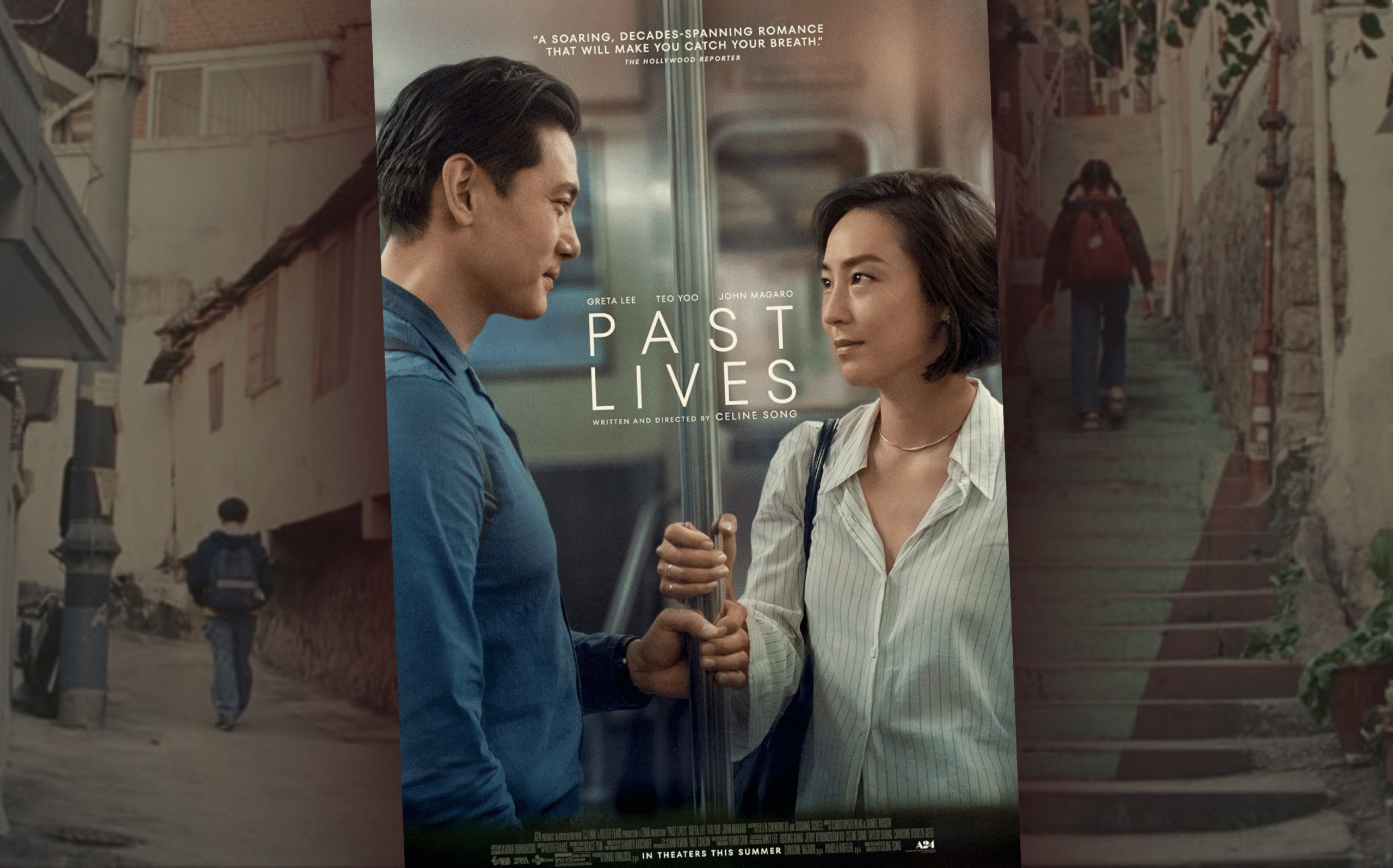
Living Between Past and Present in Past Lives
“There is a word in Korean — inyeon. It means providence or fate. But it’s specifically about relationships between people.”
Past Lives was my favourite movie that I watched in 2025. I felt a strong emotional connection to it because of its authenticity and its imperfect, unexpected storyline, especially as an East Asian immigrant living in North America myself.
The film presents its plot and character development in a delicate and intricate way, allowing meaning to emerge through subtle symbolism and foreshadowing rather than dramatic plot twists.
Instead of portraying fate through grand romantic gestures, Past Lives explores the concept of inyeon through small, quiet moments in the life of an ordinary girl, Na Young, and the relationships she forms as she grows up. One scene that particularly stood out to me was when Na Young and Haesung parted ways after walking home from school together. At a Y intersection in a small alley, Na Young’s home is uphill while Haesung’s path continues straight ahead. As they say goodbye, Na Young stands on the steps looking down at Haesung while he looks up at her. This visual composition serves as an important moment of foreshadowing, representing the future paths of the two children: one leaving to pursue a new life in North America, and the other remaining where he began.
Shortly before Na Young leaves Korea, her mother arranges a meeting between her and Haesung at a playground so the two children can spend their final moments together and say farewell. I found this moment especially meaningful because it shows her mother’s awareness of her daughter’s first innocent but emotionally significant connection. This contrasts with the common stereotype of East Asian mothers, who are often portrayed as prioritizing academic and professional success over emotional development. By arranging this meeting, Na Young’s mother is shown as a more complex and progressive character. This decision also reflects her broader mindset, particularly her choice to move her family to North America in search of a more open-minded and creative educational environment. Even as a secondary character, Na Young’s mother is written with depth, making her feel realistic and well-rounded.
The day at the park ends with a quiet car ride home, during which Na Young falls asleep on Haesung’s shoulder while the two hold hands. This scene feels like a moment frozen in time, capturing a sense of innocent and understated intimacy. Haesung remains completely still, careful not to disturb her sleep. This character trait continues throughout the film and into his adulthood. Haesung becomes a steady and trustworthy presence for Na Young, someone she can always return to emotionally. His life remains constant and linear in South Korea, in contrast to Nora’s constantly evolving life in North America.
When Na Young and Haesung meet again twenty years later, they reunite in New York City. By this point, Na Young is no longer known as “Na Young,” but as “Nora.” She lives in a small apartment with her Jewish-American husband, Arthur, and the two lead a happy, ordinary life as writers in the city. On the day Haesung arrives in New York, the three of them sit together at a bar. Nora sits between the two men and continuously translates their conversation between Korean and English. I believe this scene is the clearest representation of Nora’s identity in the entire film. Visually, it resembles a timeline of her life: Haesung represents her past, while Arthur represents her present and future.
This moment reinforces the idea that Past Lives is not a traditional romance film, but rather a drama about fate and the balancing of immigrant identities. Haesung symbolizes the life Nora could have lived had she never left Korea as well as the “what-ifs” of a fairytale-like romance between childhood sweethearts. Arthur, however, represents the life Nora consciously chose and built for herself, even when it did not align with expectations. This shows Nora’s independence as she does not allow her past to define her present or override the life she has intentionally created.
One aspect I appreciated most about the film is how Arthur is not portrayed as a barrier to Nora’s connection with Haesung but as someone who respects and seeks to understand her emotional complexity. He makes an effort to learn about her identity and hometown, and when Nora speaks about her childhood best friend, he does not respond with jealousy or insecurity.
I found this portrayal of masculinity particularly refreshing in modern media. Nora acknowledges the significance of her past with Haesung without abandoning the future she has chosen.
This reinforces the idea that Past Lives is not about choosing one love over another but about accepting that multiple truths and identities can coexist within one person.
The most important takeaway I gained from this film is that fate, or inyeon, does not determine a “correct” ending or resolution. Instead, inyeon gives meaning to temporary relationships, unfinished emotions, and missed connections. For immigrants especially, identity is complex and nonlinear; you carry multiple versions of yourself across different places, languages, and relationships. Past Lives captures this reality with honesty and emotional restraint, making it a deeply resonant and meaningful film.

Norah Xun
Norah is a grade 10 student living in Toronto. She enjoys making art, writing, and music. Norah loves to travel and to observe the different cities in the world as she has lived in three throughout her fifteen years.
You may also like
“The Only Thing Crazier Than Love is Family”: Crazy Rich Asians the Book vs. the Movie
Alexis Icasas takes a look at the similarities and differences between the book version of Crazy Ric

“If You Ain’t Scared, You Ain’t Human”: The Maze Runner Book Versus Movie
Joshua Steed takes a look at The Maze Runner by James Dashner and compares the book to Wes Ball's mo
Studio Ghibli’s Quiet Heroines: Why Studio Ghibli’s Female Characters Feel So Real
Victoria Petersen takes an in-depth look at Studio Ghibli's female characters, and why they feel so