
The Death of Individualistic Fashion
As we move swiftly into 2026, a lack of passion, colour, and individuality grows more evident by the day. A once expressive and vibrant world increasingly appears robotic and lifeless. The modernization of society is reflected through fashion trends, collectively followed aesthetics, and assimilated ways of thinking. As our society progresses, creativity begins to decay. Fashion is progressively losing its significance, as it becomes a means of conformity and control; impelling those who follow to abide by its strict and rigid guidelines, rather than flourish in its once individualistic nature.
The “clean girl aesthetic”
The recent yet ongoing praise of the “clean girl aesthetic” creates a standard of beauty where one must appear perfect; with minimal makeup, acne-free glossy skin, expensive products, and simplistic clothing. This aesthetic is most common amongst young girls, from pre-teens to young adults, becoming yet another tactic society uses to suppress and constrain young women. This aesthetic urges women to continuously appear flawless and put together, belittling those who live realistic, complicated lives. Furthermore, this trend idolizes a synthetic, purely visual standard of beauty, which diminishes a woman’s cognitive value and internal worth. The oppressive essence of this specific aesthetic was never simply fashion; it’s a tool used to corrupt minds and alter perspectives of beauty. As this trend spreads through social media, and becomes increasingly more discussed, a growing number of women are conditioned into tying their self-worth to how well they conform to specific aesthetics, spreading the importance of fitting in over the value of self-expression.
Our world and society is slowly forgetting the significance of a nonconformist mindset, which was once illustrated through expressive fashion and a defiance of the status quo.
A tool which was previously used to bring people together through their exploration of identity and freedom, is now being used to create formulaic confinement.
80’s fashion VS modern day fashion
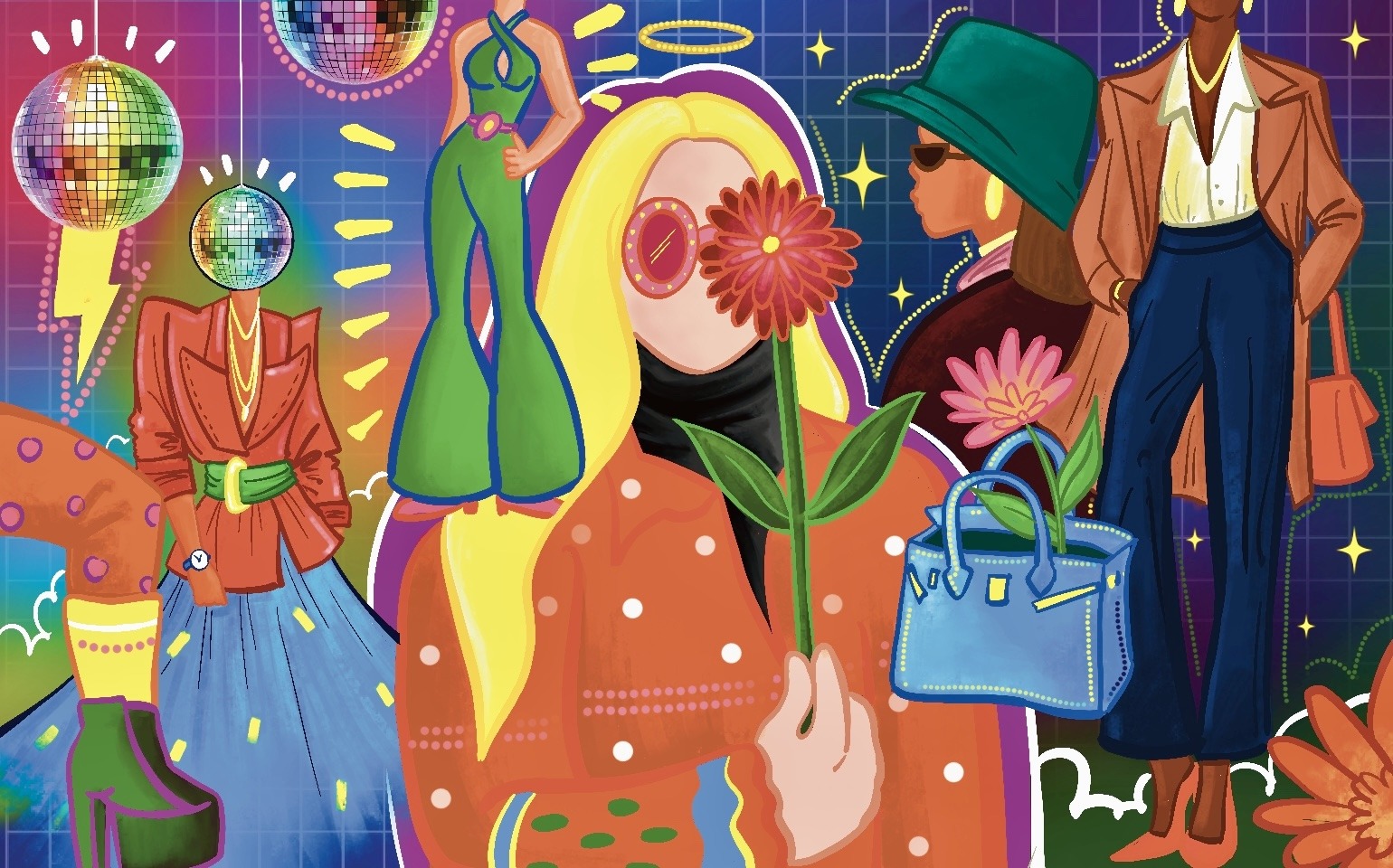
The 80s were a marvelous time for the world of fashion, often described as the era of bold, expressive and flamboyant styles. Fashion was used to uplift women, transforming them into their most confident and successful selves, rather than defining one’s worth based on biased criteria. One significant example of this is the implementation of “power dressing.” Women would wear shoulder padding and other authoritative apparel, in order to receive respect and hold significance in society. This was defining for its time, as it supported the social change of women entering the workforce.
The 80s were a wonderful time not only for women but for men as well, allowing them to divert from the pressures of toxic masculinity, and embrace a creative and colorful style. The implementation of this diverse attire allowed for stereotypical gender roles to begin to shift, signifying this era’s mass importance.
Although the 80s were far from perfect in a plethora of ways, the era was undeniably transformational through its use of fashion. In modern day society, clothing no longer enforces the values or support of social progress it did in the past. The increase in access to fast fashion, as well as non-stop advertisement through social media outlets and traditional adverts, shapes the influence of fashion on our communities. This change in fashion’s role in today’s society has revoked its symbolic importance, focusing instead on its economical benefits. Fast fashion was created to solely benefit the industry: with workers being heavily underpaid, and items having a short lifespan, neither the buyer nor the laborers benefit.
As the quality of clothing begins to decline, it loses one of its fundamental purposes of self-expression, steering towards new suppressive principles.
Its loss of significance has allowed fashion to become purely aesthetic, rather than holding any deeper symbolic meaning. Once practical, long lasting, and intricate clothing has been transformed to feed the consumeristic lifestyle through cheap materials and short life spans, resulting in an increasingly homogenized and wasteful generation.
What does the future hold?
As we rush towards the future, the fashion industry does not intend to slow down. With technological advancements and the harsh implementation of artificial intelligence into most aspects of existence, this will begin to include fashion. Clothing will slowly merge with technology, diminishing a crucial form of creative expression. With AI driven and digital-based styles, fashion will gradually lose its humanistic qualities. This is notable as eventually fashion will become largely practical as AI begins to take over creative processes, eliminating the core purpose fashion holds as a tool of self-expression and social change. This highlights the importance of the present and communicating your personality with the world, while possible.
Self-connection
I am surrounded by people who dress the same, with purposefully identical brands and products. Subsequently, this not only creates a depersonalized and robotic physical environment, but it also influences their humour, personality, and values. As my surroundings slowly merge into one singular aesthetic, minds begin to align, creating streamlined copies of once individualistic and passionate people. This has become an epidemic of conformity. You should act, dress and live by your own personal values. Dressing for popularity allows you to lose yourself in the mix, becoming an unoriginal replica of those who surround you. You ought to recall the scarcity of our time on earth, and allow this to drive your will to utilize fashion as a tool of self-expression and uniqueness. To dress the same as those around you is boring and outdated, allow yourself to get lost in the wonders of personal freedom.

Lea Shannon
Lea Shannon is a high school student who is passionate about creativity, self-expression, and individuality. She loves music, writing poetry, and traveling.
You may also like
To Read or Not to Read: Why Teenagers Should Continue to Read Shakespeare
As the English teacher announces the start of the Shakespeare unit, the whole class responds with a
Moving Forward: Transitioning to High School
Mihir Dinavahi dives into the transition from middle school to high school and how it can be intimid
The Endless Cycle of Scrolling
Joanne Tung takes a look at social media doom-scrolling and how to break this all-too-common bad hab