Why Libraries Matter More Than Ever: What Reading Taught Me to Understand About Other People
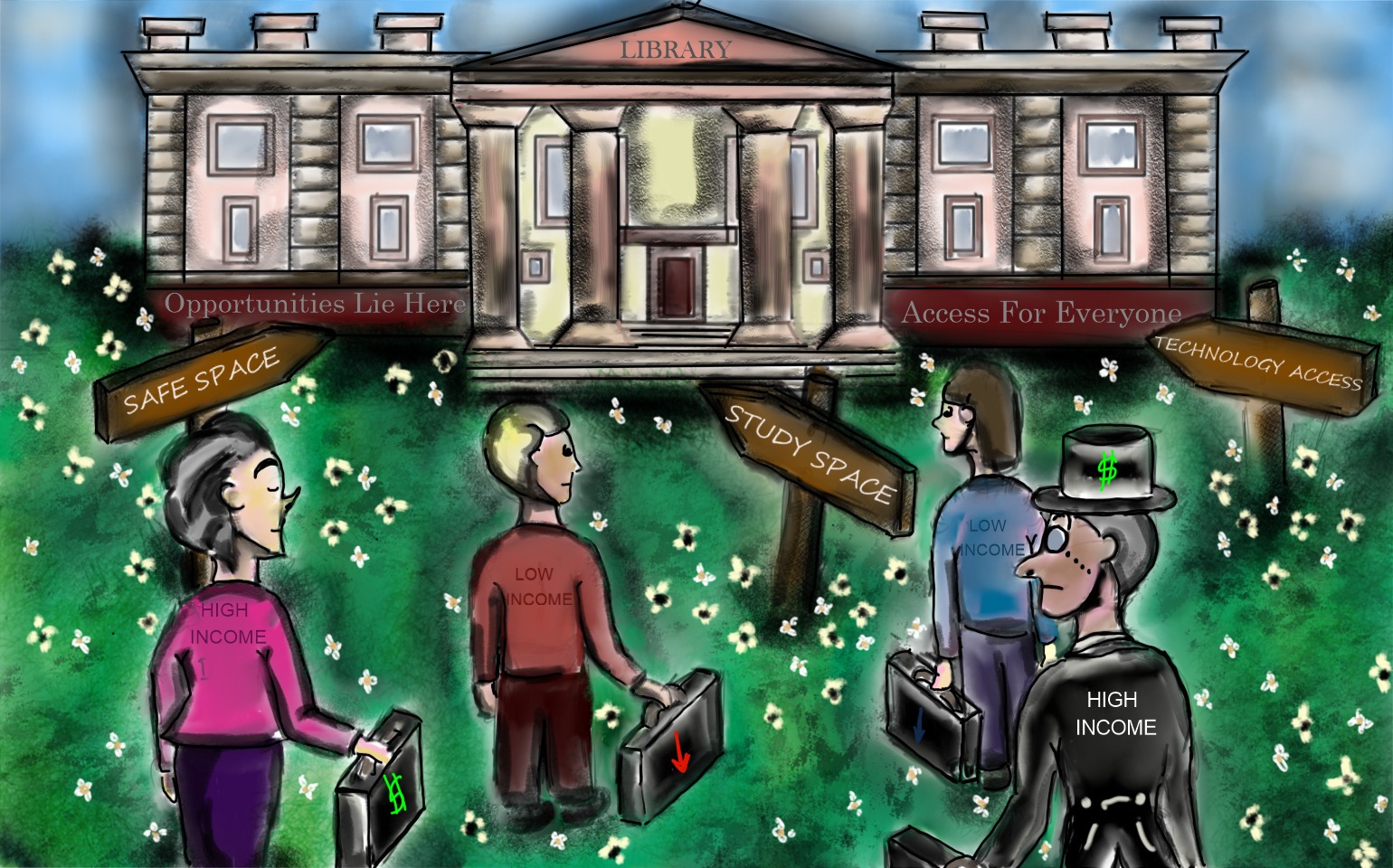
When people think about libraries, they often picture shelves full of books and quiet study spaces. I see something much bigger. To me, libraries are one of the few places left where opportunity doesn’t depend on how much money you have. They are places where anyone can walk through the front doors and leave knowing something they didn’t know before. That matters more today than ever.
As a grade 12 student, I’ve spent a lot of time thinking about social systems, who gets access, who gets left out, and why. Those questions don’t just apply to politics or economics. They also apply to education, knowledge, and reading. Libraries help level a playing field that is often far from equal.
One book that challenged my thinking recently was The Take by Kelly Yang, a novel that explores ambition, power, and difficult choices. However, what drew me in wasn’t just the plot, but how the story encouraged me to step inside the lives of people whose experiences were different from my own. Instead of asking whether I agreed with every decision the characters made, I found myself asking why they made those decisions in the first place.
That shift in thinking is one of reading’s greatest gifts.
Books remind us that people are rarely as simple as they first appear. Behind every decision is a history, a pressure, a fear, or a hope that we may never see at first glance. Reading doesn’t excuse harmful actions, but it encourages us to understand the circumstances surrounding them before rushing to judgment.
We live in a world where opinions travel faster than understanding. Social media rewards quick reactions, short clips, and immediate conclusions. It’s easy to place people into categories before we’ve taken the time to understand their experiences. Reading gives us the chance to stop and think things through. It helps us slow down and consider the other side of things before jumping to the next thing.
Libraries make that possible.
Every shelf represents hundreds of different perspectives. You can read about immigrants building new lives, scientists solving impossible problems, young people navigating school, families overcoming hardship, or communities fighting for justice. Every book offers a chance to experience someone else’s world without ever leaving your chair.
That’s something no algorithm can fully replace.
One of the most important lessons I took away from The Take was a new understanding of power. Before reading it, I tended to think that success was mostly the result of hard work, talent, and determination. Now I see that power also comes from access to opportunities, resources, and networks that are not available to everyone. Achievement is often shaped as much by the doors that are open to a person as by their individual abilities. That idea connects directly to why libraries exist in the first place. Opportunity isn’t distributed equally, and many people spend their lives trying to reach doors that others hardly notice are open.
Libraries provide access.
Access to information.
Access to technology.
Access to job resources.
Access to community programs.
Access to study spaces.
For many people, especially young people, those resources can completely change the direction of their lives.
Not every family can afford to buy dozens of books every year. Not every student has reliable internet at home or somewhere quiet to go. Some people simply need somewhere safe to spend an afternoon. Libraries quietly fill those gaps every single day without asking who deserves help more than someone else.
That’s one of the reasons I admire them so much. Libraries don’t just lend books; they invest in people.
The more I read, the more I realize that empathy isn’t something you’re born with. It’s something you practice. Every novel asks you to see through another person’s eyes. Every biography reminds you that history was lived by real people. Every memoir reveals struggles that statistics alone could never capture.
Over time, those experiences accumulate, and you become slower to judge. Your way of thinking and learning starts to change. You become more curious, more patient, and more willing to ask questions before assuming you already know the answer.
I think our communities need more of that.
Through reading, I learned to be more aware of my own assumptions towards other people and their experiences. Sometimes I’ll begin a story convinced I understand a character, only to discover halfway through that I completely misunderstood them. That’s a valuable lesson because real life works the same way; everyone has a story. We rarely know everything another person is carrying.
For me, libraries represent hope because they make these experiences available to everyone, regardless of income or background.
Knowledge shouldn’t be a luxury.
Understanding shouldn’t belong only to people who can afford expensive education.
Curiosity shouldn’t have an admission fee.
Libraries quietly defend those principles every day.
Looking back, I realize that reading has done much more than improve my vocabulary or help me succeed in school. It has challenged my beliefs, introduced me to perspectives I would never have encountered otherwise, and reminded me that every person has a story worth listening to. In many ways, that’s why libraries matter more than ever. They’re not simply buildings filled with books. They’re places where understanding begins. In a world that often feels divided by misunderstanding, that may be one of the most valuable services any institution can provide.
Ultimately, libraries matter because they help us become better people, not just better students. Every book we read challenges us to question our assumptions, broaden our perspective, and recognize the humanity in people whose lives look nothing like our own. In a world that often encourages division, libraries quietly encourage understanding. They remind us that knowledge is most powerful when it is shared, and that empathy grows through curiosity, patience, and a willingness to listen. If we want stronger communities and a more compassionate society, we must continue investing in the places that make those values possible. Libraries are one of those places.

Ethan Wu
Ethan Wu is a grade 12 student from Toronto who writes about systems, power, and real-world inequality. He focuses on how structures shape opportunity—who gets access, who gets left out, and why. His work connects stories to real-life decisions, especially around fairness and survival.
You may also like
Tracy Deonn’s Legendborn: Grief, Magic and History
Natalie See takes a look at Tracy Deonn's Legendborn and reviews its subject matter, plot and histor
The Invisible Life of Addie LaRue: Unforgettably Forgettable
Eloise Gibbens takes a look at the plot, characters and themes in The Invisible Life of Addie LaRue
The Normalization of Stress in Youth
Saia Manchanda challenges the normalization of student burnout, questioning why exhaustion has becom