
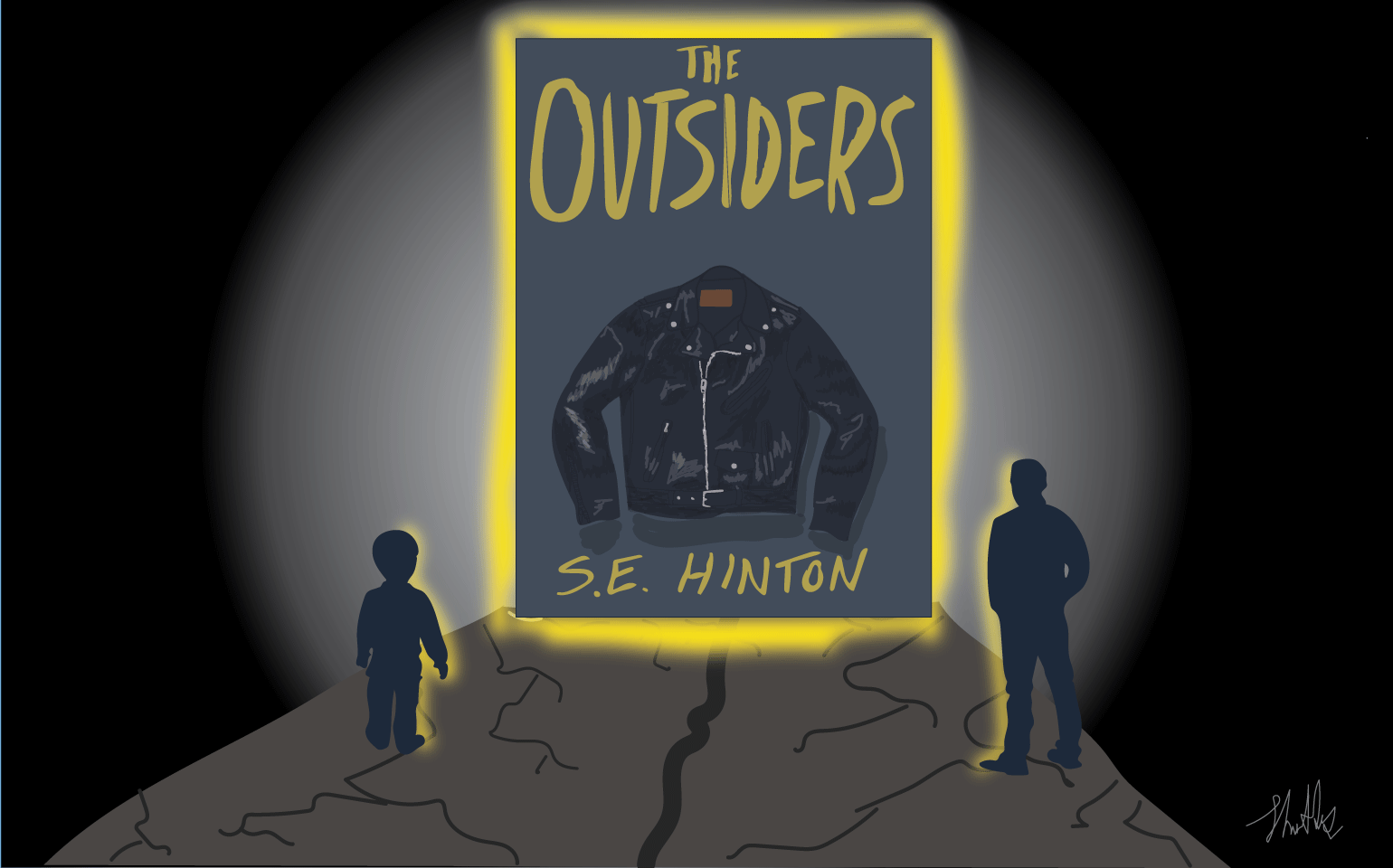
Why The Outsiders Stayed Gold
I never would have thought that a novel from the 1960s would stick with me years after reading it the way The Outsiders by S.E. Hinton did. It is a wonderful story that has captured the attention of young readers for decades and is widely recognized as a classic piece of literature. Beneath the layers of gang rivalries, The Outsiders is about identity, friendship, and loyalty–all components in our own lives.
The story takes place in the 1960s in Tulsa, Oklahoma. There are two gangs, divided by their social statuses. The lower-class gang that lived on the East Side of Tulsa were commonly referred to as the “Greasers.” The upper-middle class gang, the Socials, lived on the West Side of town and were better known as the “Socs.”
The protagonist Ponyboy (Pony) Curtis and the rest of the Greasers are viewed as tough, rebellious delinquents simply for their poverty and rugged appearance; long, slicked back hair and leather jackets.
However, in reality every Greaser has their own unique personality. Pony is a student with “good grades and [has] a high IQ and everything” (Hinton 4). His older brother, Darrel, better known as Darry, rejected a scholarship to a good university to stay with his two brothers, Pony and Sodapop (Soda). Fellow Greaser Dallas (Dally) Winston is viewed as “tougher than the rest of us—tougher, colder, meaner”.
Although Dally seems cold from the outside, on the inside he was a loyal guy who had a soft spot for his friend Johnny. Dally’s difficult past built a wall between him and other people, which is showcased in this line: This is relatable because it is easy to act indifferent in situations like that to protect yourself. Dally is afraid of being vulnerable, because if he opens up to someone he might get hurt. In the tragic end of his life, he realises that he won’t be able to live without his best friend Johnny in his life. This shows that no matter how “tough” you may seem, loneliness will always catch up to you.
Despite the fact that the Greasers were criticized unfairly, the Socs were also judged based on their appearance and wealth. It’s easy to assume that they are a bunch of spoiled brats with an easy life. Ponyboy himself misjudged a Soc named Cherry Valance, believing she was just a stuck-up cheerleader. However, after Pony had a conversation with her at a drive-in movie theater, he realised she was a sweet girl who was intelligent and empathetic. Cherry assured Pony that not all Socs are like that, and that “[t]hings are rough all over” (Hinton 35), hinting that even the upper-class kids had their own personal struggles.
This moment allowed Ponyboy to see things in a more open-minded way. He realised that not only were things painful and “rough” for the Greasers, but it was a universal feeling. Bob, a Soc who targeted the greasers based on their class and stereotypes, was killed in the novel. Although Pony initially dislikes Bob, after he spoke to Cherry and his best friend Randy, he starts to humanize and see him as “[a] real person, the best buddy a guy ever had” (Hinton 162).
This shows that everyone has good and bad traits, and that a person is more than the labels society gives them. It’s easy to fit people into stereotypes, when it could be misleading about one’s true character.
In my experience, it’s easy to look at the other kids in the hallways at school and make quick judgments based on what they are wearing or who they hang out with, but the truth is that everyone has depth that isn’t evident in a five second glance. People show the world what they want them to see, but underneath the facade, we all have our own struggles.
This is why readers still resonate with The Outsiders inthis day and age, We might not have heavily greased hair or drive 1960s Mustangs, but the feeling of being misunderstood and stereotyped is universal. Whether it’s based on gender, age, race, or even being a new student at school, these prejudices can make anyone feel silenced, misunderstood, and out of place—like an outsider.
The Outsiders also shows readers what true loyalty looks like. Since the Greasers didn’t fit in, they stuck together. The gang were more than friends—they shared a strong bond that made them like brothers. During tough situations the gang would protect and help one another.
However, the most profound lesson in the novel came from Johnny’s dying words: “Stay gold, Ponyboy” (Hinton 148). Referring to the Robert Frost poem they read earlier in the story, Johnny finally understood the true meaning of staying gold on his death bed. It wasn’t about their social status, but about childlike wonder and innocence. Even though the world is full of rumbles and disorder, there is still beauty that is worth appreciating. He teaches Pony that there is still purity and goodness in the world, and that he should stay true to himself, even if they live a complex, violent lifestyle.
Overall, The Outsiders reminds us to not judge a book by its cover and shows what true friendship can look like.

Sumaiya Carr
Sumaiya is a high school student. Her favourite subjects are science and English. During her free time she likes to write short stories, play the piano, and read books, in particular classics. She hopes to be a psychologist and an author someday.
You may also like
Deconstructing Dystopic Literature
Ilhan Yusuf compares the dystopian world differences between 1984 by George Orwell and Aldous Huxley
Why David Chariandy’s Brother Is Worth Reading
Andrew Chen explains why David Chariandy's "Brother" is a book that will pull at your emotions and k
The World of Memoirs: The Glass Castle vs. Educated
Saryna Ramsay compares Jeannette Walls' The Glass Castle and Tara Westover's Educated, two moving an